LinkConnector Validation

A Genealogist In The Archives

Saturday, February 4, 2023

Book Review: Revolutionary Roads by Bob Thompson

Revolutionary Roads: Searching for the War That Made America Independent and All the Places it Could Have Gone Terribly Wrong by Bob Thompson. Published by Twelve Books: 1290 Avenue of the Americas, New York, NY. 10104; https://www.twelvebooks.com/; 2023. ISBN 978-1-4555-6515-3. 448 pp. Bibliography, illustrations, index, notes. Hardback. $32.00.


Cover of Book, Courtesy of Twelve Books

Bob Thompson’s new book Revolutionary Roads is a true adventure story. I am always telling genealogists to “walk in your ancestor's footsteps” and Thompson’s book is like going back in a time machine to experience the crucial places during the American Revolution. Many times, we can’t understand what our ancestors experienced, saw, and lived through unless we actually go there and see if for ourselves.

Revolutionary Roads tour through many of the Revolutionary War sites makes for a great read. I found myself not wanting to stop reading and couldn’t wait to get to the next chapter. I was concerned that I would not be able to visualize the places the author visited but his writing kept me interested and I could really see the places he was describing. In addition, the reader gets a great dose of “what if” from Thompson as he talks about what could have happened if the war didn’t go just as it did.

This book is an example for every genealogist to consider the events your ancestors experienced through their eyes as much as possible. Visiting those places, if they still exist, that had an impact on their lives, their decisions, their accomplishments, and their defeats can really add to your ancestor story.

The author covers many of the lesser-known battles and incidents, which I really liked and was glad to see. I envisioned my ancestors that I know were living in the same areas or were involved with the Revolutionary War as I read this book. Thompson’s writing helped me to place my ancestors in those times and places and truly have more of an understanding of what they went through.

I can highly recommend Bob Thompson’s Revolutionary Roads: Searching for the War That Made America Independent and All the Places it Could Have Gone Terribly Wrong to anyone wanting to know how to trace their ancestor’s footsteps and especially if you are like me and love reading about the Revolutionary War.


Courtesy of Twelve Books


***********************************************************************************

NEW! FREE MyHeritage Webinar by Melissa Barker

MyHeritage: Your Personal Genealogy Archive

Many of us are not able to travel to those places where our ancestors lived to do genealogy research. This should not deter us from finding information about our ancestors. MyHeritage can be your "home away from home" online archive to help you find information on your ancestors. Learn from a seasoned genealogist and archivist how to find archived records on MyHeritage from home.


Wednesday, February 1, 2023

Black History Month in the Archives

February is Black History month and many of our local, state and national archives in the United States are gearing up for Black History Month programs, exhibits and displays. These archives will be sharing African American histories, documents, photographs and artifacts. 

As the archivist for the Houston County, Tennessee Archives & Museum, I am very excited about celebrating the black history in my county and the entire United States.

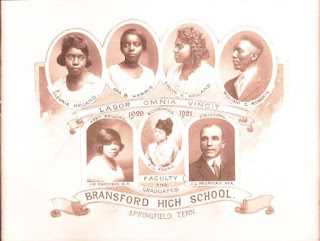
Bransford High School Graduates, Tennessee State Library and Archives

Many of our local, state and national archives take great pains in collecting, preserving and sharing their African American records with the public. Whether these records are Manuscript Collections, Photograph Collections, School Records or artifacts that directly relate to the history and lives of African Americans, they are extremely important to our over all world history.

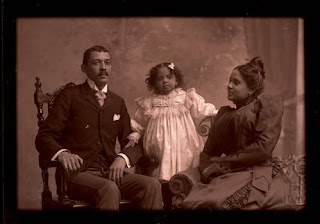
Portrait of Henry W. Allen, Catherine B. Allen and Minta B. Allen, Tennessee State Library and Archives

Black History Month is an annual celebration of achievements by African Americans and a time for recognizing their central role in U.S. history. Also known as African American History Monty, the event grew out of "Negro History Week", the brainchild of noted historian Carter G. Woodson in 1915 and other prominent African Americans. Since 1976, every U.S. president has officially designated the month of February as Black History Month. Other countries around the world, including Canada and the United Kingdom, also devote a month to celebrating Black history.


If you have African American ancestors, I hope you take the month of February to celebrate their lives and tell their stories. Every person has a story to tell and if we as genealogists do not document and preserve our ancestors stories, they will be lost forever.

******

Have Tennessee African American Ancestors?

Check Out My Legacy Family Tree Webinar

The Tennessee State Library and Archives: A Mega Archives for Your Tennessee Ancestors


Tennessee State Library and Archives


Friday, January 6, 2023

Book Recommendation: "Organize Your Genealogy: Strategies and Solutions for Every Researcher" by Drew Smith

Friday Book Reviews and Recommendations

This is my first blog post of many that I hope to do in 2023 sharing my book recommendations and reviews. I am an avid reader of non-fiction history, biographies and genealogical books. I hope you enjoy what I share and I encouraged you to read more in 2023!

Since January is that month we all think about New Year's Resolutions and getting organized, I wanted to recommend a fantastic book to help you organize your genealogy research. The author, Drew Smith, has done an excellent job with this book that was originally published in 2016 but very relevant today. 


Organize Your Genealogy: Strategies and Solutions for Every Researcher. By Drew Smith. Published by F & W Media, Inc., 10151 Carver Road, Suite 200, Blue Ash, OH 45242; http://www.fwcommunity.com; 2016. ISBN 978-1-4403-4503-6. 239 pp. Appendix, index

When I heard that Drew Smith had a new book out and it was on organizing your genealogy, I was excited. As a certified archives manager, I am asked all the time about how to organize records, photographs and other ephemera since that is a big part of what I do on a daily basis. As a professional genealogist, I teach classes and give presentations on organizing your genealogy with an emphasis on records preservation.

When I first opened the book, I was struck by a few of the topics listed in the Contents section. While most of the chapter titles are what you would expect to find in a genealogy organizational book, a couple of the titles were unique. Such topics as Organizing Your Communication, Organizing Your Learning and Organizing Your Volunteering, I thought were unique in genealogy organization.

Smith’s target audience for this book is to the beginning genealogist to the professional genealogist and all levels in-between. I can attest to the fact that everyone, no matter where you are in your genealogy journey, will learn something from this book. Smith emphasizes the concept that genealogy organization is a personal thing, individual to each person; there is no right way or wrong way. Find what works for you and be consistent.

In Chapter One, Smith talks about Organizing Yourself. He says: “Your mind is without a doubt your most important genealogical tool”. Smith points out things like sleep, your diet, simplifying your workspace, time management, using calendars, taking breaks and your stress levels as important aspects of genealogy research and organizing yourself. He also explains that establishing a genealogy research routine is part of the genealogy organizational process.

Smith talks about Organizing Your Space in Chapter Two. I appreciate and applaud Smith for suggesting the work space needs to be hospitable for documents. Smith goes into great detail about the space you use for your genealogy research and what you need to be successful. He includes a workspace check list which includes everything right down to the drink coaster.

In Chapter Three, Smith encourages us to Organize Your Goals. He says: “…choose a goal that has a realistic and concrete result and allows you to track your progress and remain motivated over time.” Smith does a great job of explaining how to set such goals, with examples from his own genealogy research. He also explains the importance of to-do lists and how to implement them either by using an app or using an actual printed calendar.

Organizing Your Notes and Ideas is the subject of Chapter Four. Smith describes several options to capture and organize a genealogist’s notes and ideas. Taking those scraps of paper and sticky notes and turning them into a workable format. The reader will get an extensive tutorial on Evernote in this chapter.

Misc. Documents, Houston County, Tennessee Archives & Museum


In Chapter Five, Smith gets to the meat of the subject of organizing your genealogy with Organizing Your Files. Smith describes organizational methods to use with paper files and computer files. The emphasis being that each person needs to find a system that works for them. Everyone is different and gravitates to different organizational methods. I particularly appreciated Smith’s emphasis on using archival materials to preserve and safe guard genealogy documents. His description of preservation methods are right in line with archival methods used in any professional archives setting. Smith’s explanation of how to set up computer files is easy and straight forward. The added use of cloud technology will hopefully insure genealogists will not lose their data.

The genealogy research process can be overwhelming to some genealogists. Smith explains how to Organize Your Research Process in Chapter Six. Smith says: “Having a well-organized, purposeful, and methodical research process is the key to productive and fruitful research”.  Smith explains how research logs, blogs and genealogy software programs can help the genealogist organize their research process. He also provides a genealogy software comparison worksheet at the end of the chapter, comparing all the current genealogy software programs.

Genealogists wouldn’t get anywhere without communicating with other researchers, libraries and archives just to name a few. In Chapter Seven, Smith helps the genealogist Organize Your Communication. Smith helps the genealogist organize their correspondence. I was particularly glad to see Smith spend time on how to organize emails since that form of correspondence can be daunting to deal with and organize. His guidelines on how to work with mailing lists, message boards and Facebook is well explained.

Old Letters, Houston County, Tennessee Archives & Museum

Online research is the way most genealogists look for their ancestors. Smith helps with this subject in Chapter Eight with Organizing Your Online Research. Smith does very well guiding the genealogist on how to organize their online research by navigating them through the vast internet with its seemingly never ending genealogy websites. He uses methods of planning your online research and organizing website bookmarks.

Many genealogists get opportunities to travel to do their genealogy research. In Chapter Nine, Smith discusses Organizing Your Research Trips. Smith gives the genealogist great advice on preparing for a research trip and being organized once you get to the facility and what to do when you return home after your genealogy research trip. I specifically enjoyed his section entitled “Create a Mobile Research Office”.

Organizing Your Learning is the title of Chapter Ten. In this chapter, Smith does a great job of emphasizing genealogy education goals, whether you’re a beginning genealogist or an advanced researcher. Organizing your books, periodicals, blogs, genealogy conferences, virtual webinars and other educational opportunities is well addressed.

Lastly, Chapter Eleven is a great chapter on Organizing Your Volunteering. Many genealogists find that as they become more and more involved in their genealogy, they decide to become more active in their local genealogical society, historical society or other volunteer positions. Smith has some great advice on how to keep the genealogists volunteer activities organized so they don’t become overwhelmed.

Throughout the book there are Research Tips that Smith offers. Also, at the end of each chapter there is a great section entitled Drew’s To-Dos.  Smith also includes many different kinds of templates, forms and check lists at the end of each chapter.  

I would highly recommend Drew Smith’s book to any genealogist.

___________

Get more tips and help by watching my Legacy Family Tree Webinar:

The Home Archivist: Preserving Family Records Like a Pro!

http://legacy.familytreewebinars.com/?aid=4729


Tuesday, January 3, 2023

RootsTech 2024! Don't Miss It!

I am happy to announce that RootsTech 2024 is only 15 days away! The hybrid conference will take place February 29th to March 2nd and it's going to be a great event.


This annual genealogical conference is available to anyone who can attend in-person or to anyone who would like to attend virtually. 

To register for the in-person or virtual event, click this link: https://www.familysearch.org/en/rootstech/


There is a cost for the in-person event but the virtual registration is 100% FREE!

You can even Create Your RootsTech 2024 Schedule. Check out the speakers for the 3-day event and craft your own schedule at this link: https://www.familysearch.org/en/rootstech/


Every year at RootsTech there are Keynote Speakers and this year is no exception. This year the keynote speakers are Lynne M. Jackson, Henry Cho, Nancy Borowick, Katie James and Steve Rockwood.


RootsTech is all about connections. Discover your connections with relatives around the world through Relatives at RootsTech, check out this cool way to connect with cousins you didn't even know you had around the world: https://www.familysearch.org/en/rootstech/


Lastly, I will be presenting two LIVE presentations at RootsTech! Sign up to attend my live virtual presentations and put them on your RootsTech Calendar:


Melissa Barker RootsTech Virtual Presentations

Thursday, February 29, 2024 at 2:30 p.m. Central, Digging Into Finding Aids: The Road Map to Any Manuscript Collection


Friday, March 1, 2024 at 4:00 p.m. Central, Church Records in Archives


Here is my speaker page where you can add my presentations to your calendar or watch them virtually and you can also watch for FREE my previous RootsTech presentations. https://www.familysearch.org/en/rootstech/speakers/melissa-barker/en


So, get ready for RootsTech 2024! Register Today!


Remember: It's Not All Online, Contact or Visit and Archive Today!


It's Not All Online: Researching In Archives Webinar!
Researching in archives, libraries, historical societies, genealogical societies, courthouses and any other repository can be intimidating. This webinar will show you how to plan ahead for a successful research trip and also help you with your "To-Do List" once you get there. Contacting or visiting an archive will help the genealogist be more successful in their genealogy research.


Wednesday, December 28, 2022

Preserving Christmas and Other Greeting Cards

Christmas 2022 is over! It's time to get back to genealogy and finding those ancestors.


But wait....

Did you get Christmas cards sent to you this season? What are you going to do with them?

I have a confession to make, I have kept every single Christmas card that I have ever received. Yes, I know, I have a problem. Maybe you have a stack of Christmas cards from this Christmas and from Christmases past. Maybe you also keep other greeting cards from Birthdays, Valentine's Day, etc.

Christmas Card, Houston County, TN. Archives


Most importantly, if you have old greeting cards that are in your genealogical record collections, are you preserving them properly?

If you are like me and have kept greeting cards from various events, holidays and special occasions and you intend on keeping them, it is important that they are preserved just like the other documents in your collection.

Preserving greeting cards is very easy, it's really a matter of obtaining the right materials and being consistent in the archiving process.

Archival Materials You Will Need and can be purchased at any online archival materials store:

-Archival plastic sleeves in the size that fits the greeting card

-Archival Box, like this one from Gaylord Archival


Before the preservation process can take place, it is important to document each greeting card and digitize it. Placing a note in your family genealogy software that says something like "Christmas 2016, received Christmas card from Aunt Marie, she signed the card". If the person put a note in the card, you might want to transcribe that into the notes field as well. Also, make notes about the senders mailing address too.

Easter Card, Houston County, TN. Archives


Digitizing greeting cards can be very tedious and time consuming. However, if you want to insure that these records are preserved in case of a disaster that destroys the cards, this is what needs to be done.

I normally scan the entire card; the front, inside and back. I place those scans in the computer file of the ancestor who sent me the card in a separate folder entitled "Greeting Cards".

I also take a soft #2 pencil and on the back of the card I write the year I received the card. Hopefully, the card's subject will tell what the occasion was but if not, you might want to make a note of the occasion.

Take the greeting card and put it in an archival sleeve that is the right size for the card. The archival supply stores have all kinds of sizes to choose from.

Next, put the cards in a Hollinger box. I normally organize the greeting cards by surname and then within that surname I put the cards in date order by year.

Hollinger Box


If you have a lot of greeting cards, like I do, you might want to dedicate a Hollinger box to one surname.

The process is quite simple and gets the greeting cards in order so that they can be enjoyed and if you are looking for a certain card, they are easy to find.

Online Archival Supply Stores:

Gaylord Archival
http://www.gaylord.com/

Hollinger Metal Edge
http://www.hollingermetaledge.com/

University Products
https://www.universityproducts.com/

Light Impressions
http://www.lightimpressionsdirect.com/


REMEMBER: IT'S NOT ALL ONLINE, CONTACT OR VISIT AN ARCHIVE TODAY!


Get My Legacy QuickGuide

Preserving Old Family Letters: Tips from an Archivist

https://bit.ly/2rW4Q60


Wednesday, December 21, 2022

Documenting Christmas Traditions

With only a few days until Christmas 2022, I started thinking about how my family has celebrated Christmas my entire life. Then I thought about how my husband's family has celebrated Christmas all of his life. Comparing the two over the years, I have found that for the most part we celebrate the season pretty much the same with the exception of one BIG event, when Santa Clause makes his arrival. 


Seems my husband's family has always celebrated Christmas on Christmas Eve. He explained to me that he would visit his Grandparents house early in the evening on Christmas Eve and then return to his own home later in the evening to find Santa Clause had come and there were presents under the tree.

Mitchum Drug Co. Christmas Advertisement, Houston County ,TN. Archives


In my own family, the tradition we followed was that Santa Clause wouldn't come until everyone was snug in their beds. So, when Christmas morning came, we all jumped up and headed to the living room to see what Santa had brought us. Sure enough, every year, Santa had visited the LeMaster home and left presents under the tree while we were sleeping.

Have you ever thought about your own Christmas traditions? How about your ancestor's traditions? Are you recording these traditions so that future generations will know why and how Christmas was celebrated in your family?

Christmas Greeting, Houston County, TN. Archives


In whatever way your ancestors celebrated Christmas, it should be recorded. If this yearly event was part of your ancestor's lives, you want to be careful to document it as much as possible just like you do a birth, marriage or death.

There are so many Christmas traditions from so many different cultures. Many of these traditions are being forgotten because they are not carried forward and practiced today by the descendants of those that started them in the first place. Whether you "believe" in Santa Clause or not, practice Christmas traditions or not, documenting and recording what your ancestors did at Christmas can help tell their life story and tell you more about the people you come from.

T.E. Bateman Christmas Business Letterhead, Houston County, TN. Archives


So, as you gather this Christmas with your family and friends, talk about why you celebrate Christmas the way you do. Ask family members if they remember any other traditions that were once practiced but no longer done today.


REMEMBER: IT'S NOT ALL ONLINE, CONTACT OR VISIT AN ARCHIVE TODAY!!

*****

AVAILABLE! from the Legacy Family Tree Webinar Library:

Scrapbooks: A Genealogist's Gold Mine

http://legacy.familytreewebinars.com/?aid=1161


Wednesday, August 17, 2022

Finding School Records in the Archives (Even if Your Ancestor Didn't Go To School)

Are you doing genealogy research in school records? Don't think you need to because your ancestor didn't attend school? Think again!

School records are one of the more interesting sources of records available in a lot of archives. Even if your ancestor didn't attend school as a child, you might be surprised by what can be found in the various types of school records.


School Enrollment from Camp Ground School in Houston County, TN., located at the Houston County, Tennessee Archives

School Transcripts or Attendance and Grade Reports: These types of records were kept at the teacher level and by the school district. These records would record when the person attended school and what grades they made in each subject. Sometimes a copy of these records were kept by the teacher and these records will get donated to an archive when that teacher passes away.

Cave Orchard School Register ca. 1929, located in the Houston County, Tennessee Archives

School Board Minute Books: These are a very interesting and a useful record source for the genealogist. These books record the business of the local school board which could include anything. This particular type of record is where you might find your ancestor even if they didn't attend school. Maybe they hauled coal for the coal burning stoves in the schools and they were appointed by the school board for this job, their name would be listed in these minutes. Possibly your adult ancestor had a problem with a teacher and they brought their grievance to the school board, this could have played out in the minute books and your ancestor would be named. A lot of local residents were involved with the school system but never actually attended school.

Houston County High School Yearbooks, located at the Houston County, Tennessee Archives

Yearbooks and School Newspapers: Many of our archives, historical societies, genealogical societies and libraries have collections of yearbooks and school newspapers.Yearbooks not only have photos of students and information about school clubs but they also will have local business advertisements. These local business would have been solicited to pay a fee for the advertisement to help pay for the printing of the yearbook. Possibly your ancestor's business is in one of these yearbooks. School newspapers. Many of our schools published a school newspaper and the articles were written by students and a lot of times there are photographs from school events. Checking school newspapers for our ancestors and their school activities is something to put on your "To Do List".

Houston County High School Newspaper, ca. 1926, located at the Houston County, Tennessee Archives

Photographs: When looking for your ancestor's photographs in an archives be sure to check any school photograph collections. They could include individual photographs as well as photographs of sports teams or clubs that your ancestor was involved with.

Erin High School Girls Basketball Team, ca. 1946, located at the Houston County, Tennessee Archives
Unknown school photo, undated, located at the Houston County, Tennessee Archives

Maybe your ancestor was one of the teachers of one of the schools. Some archives do have collections of teachers records such as teaching certificates, student registeries and grade books.

Teaching License for Gertha Brooks, ca. 1919, located at the Houston County, Tennessee Archives

School records are a must when doing any genealogy research and even if your ancestor did not attend any organized schools, remember that they could still be named in some of the school records that exist. Don't overlook this very valuable resource!


REMEMBER: IT'S NOT ALL ONLINE, CONTACT OR VISIT AN ARCHIVE TODAY!


*****


Get My Legacy QuickGuide:

Researching in Libraries and Archives

http://legacy.familytreewebinars.com/?aid=1159